 Marleysite – Your Daily Dose of Trends, Tips & Lifestyle Inspiration
 Marleysite – Your Daily Dose of Trends, Tips & Lifestyle Inspiration
The Marylebone Cricket Club (MCC) has weighed in on the controversy surrounding Akash Deep's delivery that dismissed Joe Root in the recent Edgbaston Test. Despite debate over its legality, the MCC, the ultimate authority on cricket laws, has declared the dismissal valid.
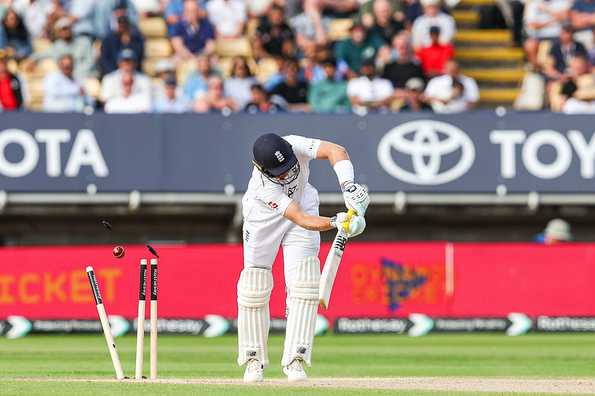
The MCC's statement emphasizes the importance of the initial point of contact between the bowler's foot and the ground. Their interpretation of the law dictates that as long as the first part of the foot to land is within the legal area, subsequent movement over the line does not constitute a no-ball.
The Controversial Delivery
During the tenth over, Akash Deep bowled Root with a delivery that left the English batsman bewildered. Replays sparked debate as they appeared to show Akash Deep's back foot landing wide of the crease. This led some media outlets and commentators to suggest it was a back-foot no-ball.
Differing Opinions
While some commentators and former England batter Jonathan Trott believed the delivery was illegal, Ravi Shastri, commentating at the time, was convinced it was a fair ball. Third umpire Paul Reiffel did not signal a no-ball, and on-field umpires Chris Gaffaney and Sharfuddoula Saikat also allowed the play to continue.
MCC's Clarification
An MCC spokesperson addressed the situation: "On Day four of India's Test against England last week, there were questions raised about the delivery from Akash Deep which bowled Joe Root, with some fans and commentators believing it to be a no ball."
The spokesperson continued, "While Deep landed unusually wide on the crease, and some of his back foot appeared to touch the ground outside the return crease, the third umpire did not call a no ball. MCC is happy to clarify that this was a correct decision in Law."
Relevant Law Quoted
The MCC referenced Law 21.5.1, which states: "For a delivery to be fair in respect of the feet, in the delivery stride the bowler's back foot must land within and not touching the return crease appertaining to his/her stated mode of delivery."
MCC's Interpretation Explained
The statement further clarified: "MCC has always defined the moment that the back foot lands as the first point of contact with the ground. As soon as there is any part of the foot touching the ground, that foot has landed, and it is the foot's position at that time which is to be considered for a back foot no ball."
"Clearly, at the point Deep's foot first touched the ground, the back foot was within and not touching the return crease. Some of his foot may have touched the ground outside the crease subsequently - that is not relevant to this Law. At the point of landing he was within the crease, and this was therefore rightly deemed to be a legal delivery," the MCC concluded.
Impact on the Match
Root's dismissal was crucial for India, reducing England to 50 for 3 while chasing a target of 608. England ultimately succumbed to the pressure, being bowled out for 271 on the final day. This secured a significant 336-run victory for India, leveling the five-Test series at 1-1.
Newer articles

 Jamie Overton takes indefinite break from red-ball cricket
 Perrin ton powers Northern Superchargers into the final
 Ashwin in talks with ILT20, may register for auction
 Ankit Sharma obtains NoC from Puducherry
 Salahuddin rules out experimentation in second T20I
 'Still a long way to go' - Taskin encouraged by steps towards rediscovering rhythm
 Nissanka ton leads SL's series sweep
 Pat Cummins faces back injury concerns ahead of Ashes 2025-26
 Phil Salt Cleared: Bat Size Probe Finds No Breach of Regulations
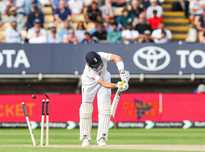 MCC Rules Akash Deep's Root Dismissal Legal Amid No-Ball Debate